
What you need to know:
Google doesn’t publish all the rules about how any particular website can get top positions (“rankings”) in users’ search results.
Be wary about guarantees…
…search engines publish some guidelines, and the global community of users has deduced quite a bit. But still, anyone promising specific, top rankings might be overconfident, at best. Worse, they might be attempting to manipulate search engines in ways that can get a website banned entirely from their indexes.
Getting good rankings is often a process.
It may take a while — for new websites and some kinds of content — before Google seems to treat them seriously. Weeks. Months. Don’t conclude too much from exceptions that, inexplicably, appear high in search results right away. The ways of Google are many and, often, mysterious.

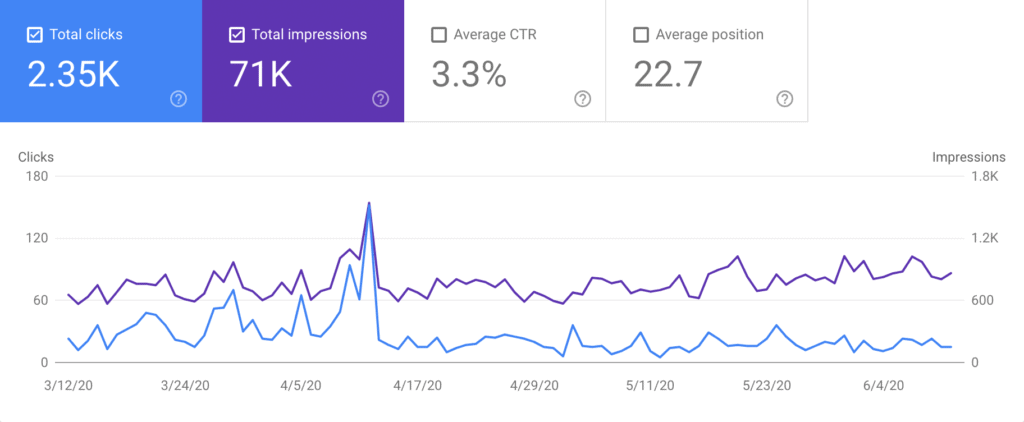
We’ve described the quest for search-engine rankings as a long-distance game of chess played in slow motion. And whose rules occasionally change, sometimes without warning the players.
Your site’s rankings might change unexpectedly — in either direction — even if you do nothing. (In some cases, especially if you do nothing.)
New websites appear online with content Google thinks is similar to yours. Or a competitor hires some search-engine optimization expertise for their own website, which then pushes yours out of its best rankings. Or Google changes something in its secret formula for ranking websites.
Any quest for web domination is, more or less, doomed.
In the early days, it was different. A client hired us to get the #1 ranking for a highly competitive keyword, and we succeeded. Their ranking was stable for weeks, and we barely had to lift a finger.
But times have changed. And (for one example) Google is correct that, if I search for “doctors,” I don’t care about doctors in the entire country who have good website optimization (SEO). I want doctors near me, so it’s perfect that Google shows me those in its top rankings.
Of course, that’s not perfect for a site owner who wants to dominate the entire nation’s — or the world’s — search results.
Still, despite everything, most web businesses — and other types of businesses with a web presence — need search engines.